Morphological characteristics of the testes and epididymides in a rat excisional wound model under the influence of the medicinal leech Hirudo verbana
DOI:
https://doi.org/10.14232/abs.2025.2.124-128Keywords:
epididymides, epididymis, excisional wound, medicinal leech, testesAbstract
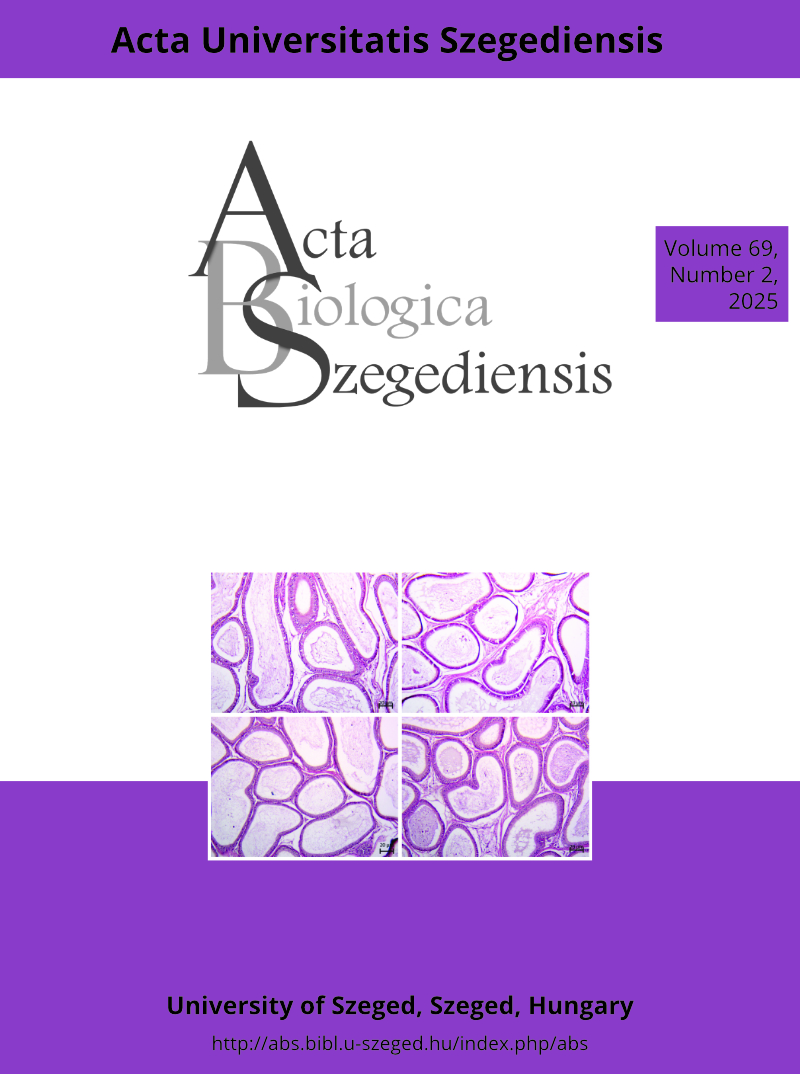
A standardized excisional wound model was established in male rats by removing circular full-thickness skin areas with a diameter of 1.5 cm. Animals were divided into two groups (n = 20 per group): a control group, in which wound healing occurred spontaneously without treatment, and an experimental group, in which one medicinal leech (Hirudo verbana, body weight 0.5–0.7 g) was applied adjacent to the wound area on days 1, 3, 7, and 14 after injury. On day 30, the testes and epididymides were collected for histological examination. Histological analysis of the testes in control animals revealed a reduced number of spermatocytes, an increased proportion of defective germ cells, and partial arrest of spermatogenesis in some seminiferous tubules compared with the experimental group. Morphometric assessment demonstrated a significant decrease in seminiferous tubule diameter and spermatogenic epithelial height in the control group. In contrast, the experimental group exhibited preservation of testicular architecture with closely packed seminiferous tubules and an intact spermatogenic epithelium. Examination of the epididymis showed that animals treated with Hirudo verbana had a significantly larger duct diameter, a wider lumen, and a preserved pseudostratified epithelium compared with controls. In the control group, degenerative changes of the epididymal epithelium and luminal narrowing were more frequently observed. These findings indicate that medicinal leech application during excisional wound healing is associated with improved histological preservation of the testes and epididymides in rats.
Downloads
Downloads
Published
How to Cite
Issue
Section